
All Hazards, One Health, One Nature (AHOHN) Framework

The world is a complex, interconnected system. The health of people, animals, and the environment are all linked. The High Alert Institute uses the All Hazards, One Health, One Nature (AHOHN) Framework to understand these connections and build stronger, more resilient communities. This approach helps us prepare for any challenge—from a local flood to a global health crisis—by creating a unified plan that benefits everyone and everything. Our mission is to provide disaster readiness education and resources, and the AHOHN Framework is the playbook we use to ensure all of our efforts have the greatest possible positive impact.

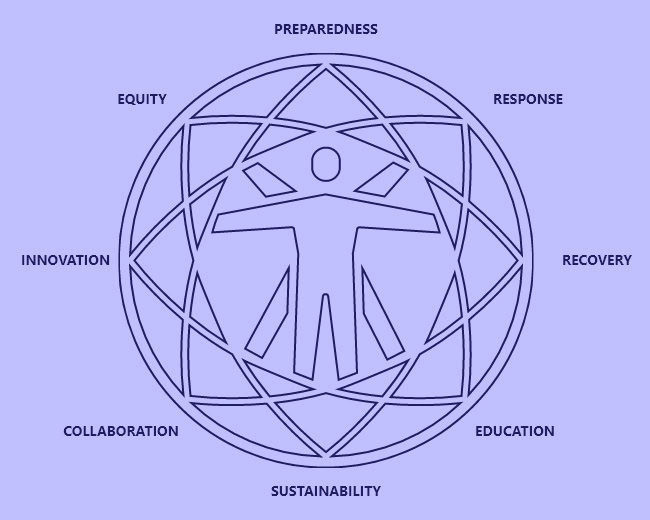
Eight Pillars of Resilience diagram with Preparedness, Response, Recovery, Education, Equity, Collaboration, Innovation, and Sustainability arranged in a circle around a central human figure

What is the AHOHN Framework?

The AHOHN Framework is a mindset and method that combines four essential ideas into a single effective approach. AHOHN acknowledges that solving large problems requires a comprehensive view that captures the entire picture, providing a foundation for the Eight Pillars of Resilience.

All Hazards

This involves preparing for any disaster or emergency, regardless of cause. Whether a natural disaster like a hurricane, a technological accident, a disease outbreak, or a man-made threat, an "All Hazards" approach applies consistent methods for planning and response. The goal is to ensure that individuals, families, organizations, and their communities are ready for anything that disrupts daily life.

One Health

This concept recognizes the strong link between the health of people, animals, and the environment they share. An illness that affects animals can also impact humans, and pollution in our surroundings affects us all. By focusing on “One Health” we aim to protect the well-being of all living things simultaneously, leading to better health outcomes for the entire system.

One Nature

"One Nature" builds on One Health, stressing that humans are a vital part of a single, unified ecosystem. The health of our shared environment—our air, water, and land—is the foundation for the health of every person, animal, and plant. Protecting our natural world is crucial to protecting ourselves. This perspective motivates us to find solutions that support the planet and all inhabitants.

One Framework

This is the playbook that brings it all together. "One Framework" offers a unified system to guide every stage of disaster management, from risk reduction and preparedness to response and recovery. Having such a playbook allows for all stakeholders to work together effectively toward a common goal.

Why the AHOHN Framework Matters

Adopting the AHOHN Framework provides clear benefits for building safer and healthier communities everywhere. This approach enables us to shift from just reacting to disasters to actively creating a better future.
  • Enhances Health Security: Builds a comprehensive defense against all threats, preparing us for the unexpected.
  • Promotes Health Equity: Helps identify and address disparities, extending disaster readiness resources to reach the most vulnerable populations.
  • Builds Resilience: Focuses on prevention and thoughtful planning to help individuals, families, organizations, and communities recover more quickly from adversity.
  • Protects Our Planet: Promotes environmental stewardship, animal welfare, and sustainable practices as essential parts of community well-being.
  • Encourages Collaboration: Breaks down barriers between sectors, promoting coordinated efforts among policymakers, businesses, and community groups.

How the AHOHN Framework Works in Practice

The AHOHN Framework is a practical approach for the entire disaster life cycle – planning, mitigation, response, and recovery. After any event, we use tools like an After-Action Review (AAR) and a gap analysis to identify what worked, what did not, and how we can improve. This cycle of continuous improvement strengthens our communities over time.

A key application is enhancing our critical infrastructure—the vital systems we depend on daily, such as energy, food, and healthcare. We have identified common failure modes that threaten our environment and health. Instead of dwelling on problems, the AHOHN Framework helps us turn them into opportunities for positive change by:

  • Maximizing efficiency: Reducing waste and enhancing planning.
  • Choosing sustainability: Safeguarding against hazards while enhancing economic stability.
  • Developing Circular Systems: Reusing and recycling materials instead of simply disposing of them.
  • Reducing Pollution: Lowering harmful emissions to safeguard our planet and climate.
  • Harnessing Waste Heat: Innovating approaches to convert thermal waste into a sustainable energy resource.

Who We Serve with the AHOHN Framework

The High Alert Institute is committed to making disaster preparedness accessible for everyone. Guided by the AHOHN Framework, we direct our efforts to support the following:

  • Individuals and Families: Equipping you with the knowledge and tools to protect your loved ones.
  • Communities: Empowering neighborhoods, towns, and cities to prepare for and respond to local hazards.
  • Businesses and Industries: Providing strategies for continuity planning and resilience that also promote sustainable growth.
  • Public and Charitable Sectors: Collaborating with agencies and organizations to strengthen public safety and deliver resources where they are needed most.

Get Trained: Find Resources to Build Your Resilience

Knowledge is the first step toward preparedness. Whether you are looking to protect your family, your business, or your community, the High Alert Institute is here to help. Explore our online publication and extensive resource library for authoritative, research-based insights within the All Hazards, One Health, One Nature Framework. Whether you are an individual, a family, an organization, a responder, or a policymaker, our resources turn evidence and experience into practical, actionable guidance.

Donate Now to Support Our Mission

Get in touch

Whether you are seeking to prepare, collaborate, or learn more about our AHOHN approach, we would love to hear from you.

Fields marked with asterisk (*) are mandatory.


Scroll to Top